7 Books About The Vietnam War You Should Know About
My list of seven must-read books about the Vietnam war, a tragic that had shaped Vietnam and the U.S. in the second half of the 20th century, a century with “loads of bombs but few flowers”, as a Vietnamese poet wrote.
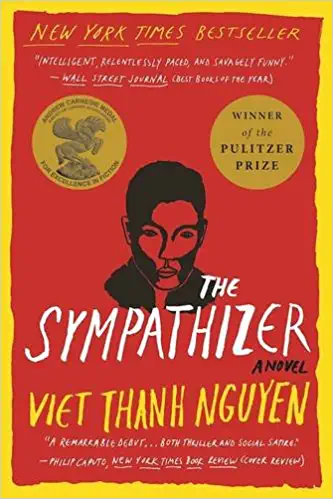
1. The Sympathizer
By Viet Thanh Nguyen
Get "The Sympathizer" on Amazon.com
Challenged the precedented that a book about the Vietnam war should be written by a white veteran man, and a Vietnamese immigrant’s book needs to mention the American dream and how it transformed their live, Viet Thanh Nguyen, a Vietnamese immigrant who came to the U.S after the turbulent event of 1975, had to bring his book to 14 publishers for it to finally got published.
The book won the Pulitzer prize in 2016 for the fiction category, a success exceeding Nguyen’s wildest expectations, as he mentioned in several interviews.
Philip Caputo, in a NYT’s book review, stated that the book gave “the voice to the previously voiceless” and had people looking at the war in a new light. Moreover, the novel reached “beyond its historical context to illuminate more universal themes: the eternal misconceptions and misunderstandings between East and West, and the moral dilemma faced by people forced to choose not between right and wrong, but right and right.”
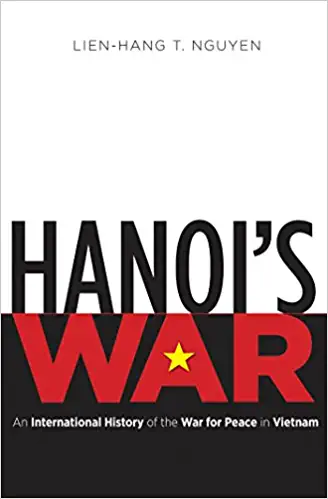
2. Hanoi's War
By Lien-Hang T. Nguyen
Get "Hanoi's War" on Amazon.com
Similar to Viet Thanh Nguyen’s case, Hanoi’s War by Lien-Hang T. Nguyen is one of those rare books about the Vietnam war actually written by Vietnamese, even though they are both Vietnamese Americans, who were born in Vietnam, but were raised in the U.S. Their roots, however, still gave them insiders' viewpoints more than outsiders.
As one of a few people, including Vietnamese scholars, who got access to the Ministry of Foreign Affair’s archive, Nguyen’s book gave the readers a better understanding of who was behind Hanoi’s war strategy and the hidden fights among North Vietnam’s top leaders.
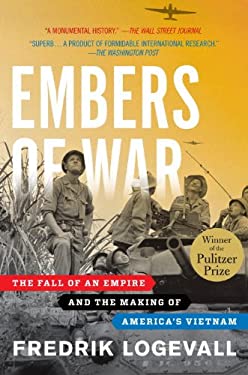
3. Embers of War
By Fredrik Logevall
Get "Embers of War" on Amazon.com
An impressive book about Vietnam from a person who has spent nearly 30 years studying about the war.
With “Embers of War,” Frederik Logevall went back to several decades before the U.S. officially involved in the war, to shed light on the relationship that shouldn't have to be so tragic - costing the lives of millions of Vietnamese and more than 58,000 Americans.
Logevall pointed out that the leader of the Vietnamese revolution, Ho Chi Minh, had approached US President Woodrow Wilson in the 1930s to ask the U.S. to support Vietnam's desire to gain independence from the French colonialists; that the war might have been avoided had Franklin Roosevelt, who recognized that European colonialism threatened world peace, had not died in 1945; or getting deeper into the war, the Americans made the same mistakes that the French made before.
Bernard Fall — a prestigious scholar on Vietnam, was quoted that the Americans “dreaming different dreams than the French but walking in the same footsteps.” Logevall also said that, while Americans may like to think that they entered the war in Vietnam on a humanitarian mission to keep Indo-China from falling into communist hands, colonialism is often in the eyes of the beholder.
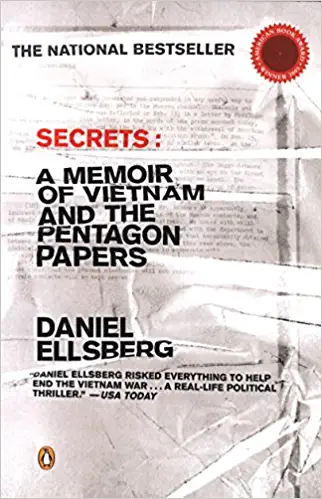
4. Secrets: A Memoir of Vietnam and the Pentagon Papers
By Daniel Ellsberg
Get "Secrets: A Memoir of Vietnam and the Pentagon Papers" on Amazon.com
My top favorite book about the Vietnam war with tons of information from an insider who worked as a special assistant for the special assistant of the Secretary of Defense, Robert McNamara. The U.S. government was lying to the public about the war. And the public didn’t care enough. And the tragedy happened.
The book is on my list mainly because it shows people’s bravery and commitment to upholding democracy’s core values. The world might be so different, and there might be hundreds of thousands of people more to die if Daniel Ellsberg, the author, didn’t care about exposing 7,000 pages of confidential papers that showed that the U.S. government was lying about the war in the case famously known as “the Pentagon Papers.”
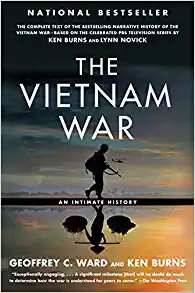
5. The Vietnam War: An Intimate History
By Geoffrey C. Ward and Ken Burns
Get "The Vietnam War: An Intimate History" on Amazon.com
The book by Geoffrey C Ward - the famous author of nineteen books, and Ken Burns - the legendary producer and director of numerous film series, is “a painful tale of America’s protracted, divisive and futile involvement” in Vietnam, as David Greenberg wrote on his review for the New York Times. The book covers the 21 years since the French were defeated in Dien Bien Phu and left Vietnam in 1954 that marked deeper involvement of the U.S. in the war to the fall of Saigon in 1975.
The author has claimed that they wanted to do things that few have done: recount the war from not just the American viewpoint but from that of the North and South Vietnamese. However, David Greenberg found that the narrative and stories included in the book were similar to the other works that Americans have done.
What David considered “the most worthwhile contribution” of the book was the compilation of hundreds of astonishing photographs that were powerful and less familiar to the audiences, such as scenes of rubble-strewn streets, desperate villagers, bewildered squadrons, and Americans and Vietnamese alike who are wounded, maimed, dying or freshly killed.
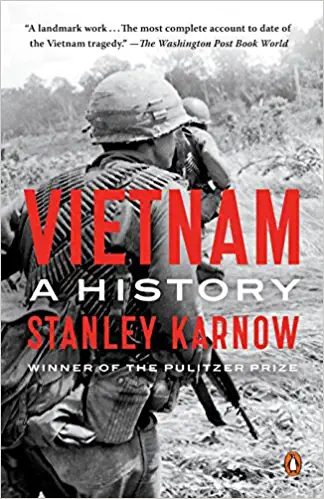
6. Vietnam: A History
By Stanley Karnow
Get "Vietnam: A History" on Amazon.com
As a well-respected American journalist and historian who is best known for his coverage of the Vietnam War, Karnow’s book on the war is of course a must-read. The book is considered a monumental narrative clarifies, analyzes, and demystifies the tragic ordeal of the Vietnam war.
A review on Goodread.com claims the book is free of ideological bias, profound in its understanding, and compassionate in its human portrayals, not to mention it is filled with fresh revelations drawn from secret documents and from exclusive interviews with participants-French, American, Vietnamese, Chinese: diplomats, military commanders, high government officials, journalists, nurses, workers, and soldiers.
The Times Book Review described Stanley Karnow’s “Vietnam” as a “less dogmatic, more objective” historical account “that leaves no reasonable questions unanswered.”
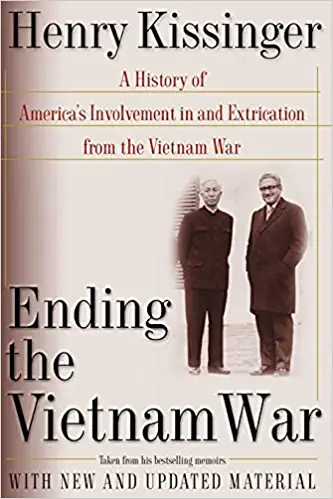
7. Ending the Vietnam War: A History of America's Involvement in and Extrication from the Vietnam War
By Henry Kissinger
Get "Ending the Vietnam War" on Amazon.com
A very detailed account from Henry Kissinger - the Secretary of State at that time, about the process of America’s withdrawal from Vietnam and the negotiations to end the war in honor for the Americans. A truly insider’s point of view, however, should be read with care.
Kissinger himself wrote that the book is "A balanced judgment on Vietnam continues to elude us--and therefore the ability to draw lessons from a national tragedy which America inflicted on itself," and "As a result, Vietnam has become the black hole of American historical memory."
He also drew one of the important lessons learned from the war was “the importance of absolute honesty and objectivity in all reporting, within and from the government as well as from the press."